| |
|
|
| |
|
|
| |
|
SSF Newsletter January 2026
|
| |
|
Keep on going
|
| |
|
Dear Reader
|
| |
|
We hope you had a good start to the new year and have returned to work with confidence and fresh ideas. Given the current global situation, we will all need such qualities. According to the WEF's 21st Global Risks Report, we are already in the midst of the predicted polycrisis. In Switzerland, the recently published biodiversity report alarmed readers with the revelation that over a third of all species in this country are endangered.
Yet, we shouldn’t forget about positive developments, such as the fact that China continues to invest heavily in climate-friendly technologies and was able to reduce emissions for the first time in 2025. Or that for the fourth consecutive year, less rainforest has been cleared in the Amazon – the lowest level since 2014. Being aware of such successes helps us keeping going on the transition path to a net-zero world and even accelerate the speed of change.
The financial sector has a significant role to play in this. Innovative financing instruments help promote sustainable solutions, while a systematic assessment of sustainability risks both in investing and financing leads to lower capital costs for leading companies. But change cannot be brought about in isolation. Politics, society, and business must join their forces to achieve faster progress. We will keep up our work to support you with guidance, support and information and look forward to many fruitful exchanges in the year ahead.
|
|
| |
|
|
Kind regards,
Sabine Döbeli
CEO, SSF
|
| |
|
|
|
| |
|
|
| |
| |
| |
|
SSF activities at a glance
|
| |
|
| |
|
Sustainable Investment Market Study: Survey open now
|
| |
|
SSF is collecting data for the Swiss Sustainable Investment Market Study 2026. By providing data, you help SSF obtain an encompassing overview of the market development in this important field. If you have not received an invitation, but wish to take part in this survey, please visit our website or contact us. Find detailed information for asset managers/banks and for asset owners (pension funds, insurers, foundations).
|
| |
|
|
|
| |
| |
|
Fourth Edition of “Sustainable Investing - Here to Stay” Webinar
|
| |
|
In the 4th edition of our series, we heard from Nadina Stodiek, Co-Head Impact Management, at Schroders about how impact can be a driver of alpha and from Michele Mattioda, Investor Relations Director, MK Global Kapital, about how private debt can reduce portfolio volatility. The recording, the slide decks, and the presented studies are available in the Member's Section.
|
| |
|
|
|
| |
| |
|
New Year’s Networking Breakfast in Geneva
|
| |
|
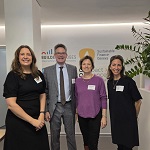
This Breakfast Networking Event co-hosted by SSF, SFG, SIFI, and Building Bridges marked a successful start to the year. Geneva once again proved to have a strong community. After brief presentations by the four host organizations on achievements from the past year and priorities for 2026, participants had the opportunity to share updates on initiatives they were working on in 2026.
|
| |
|
|
|
| |
|
|
| |
| |
| |
|
Regulatory and market news
|
| |
|
| |
|
Swiss News
European News
International News
- A number of Californian firms have published voluntary climate reports, despite a US federal appeals court temporary injunction on the California SB-261 law, which mandates climate-related risk disclosures by businesses active in the state with more than $500 million in revenue. At the end of February the California Air Resources Board will have a public hearing to consider approving the proposed climate data and financial risk reporting fee regulation.
Market News
- Datamaran has published a map visualizing global sustainability taxonomies. It distinguishes between voluntary (34) and mandatory (11) taxonomies and puts them into three categories; green taxonomies (35) are dominating, sustainable taxonomies (9) come second, while there is only one social taxonomy.
- The WEF Global Risk Report 2026 is the 21st edition of the annual series. The Global Risks Perception Survey (GRPS) captures the immediate term (next year), short-to-medium term (2 y), and long term (10 y) risk perception of 1’300 experts. Unsurprisingly, geoeconomic confrontation and state-based armed conflicts are ranking at the top in the first category. On the short-to-medium term environmental are losing prioritization while on the long term the top three concerns are still of environmental matter.
- The Morgan Stanley Institute for Sustainable Investing analyzed the behavior of international corporates with revenues above USD 1 billion (n=225) regarding the purchase of voluntary carbon credits. They found that it is a slowly growing market and the main incentive to buy more carbon credits among holders of carbon credits (n=75) is to reach their net-zero goals. Future buyers (n=75) mostly make their decision dependent on future pricing or compliance/regulatory pressure. The main reason for refusers (n=75) is the belief that they can fully decarbonize by modifying their value chain.
- Morningstar published an outlook on sustainable investing trends in 2026. Key will be to demonstrate tangible value of sustainable investing, which will be supported by the increasing awareness of physical climate risk. Furthermore, it is expected that clean energy is on the rise and will be a driver in transition and innovation. GSS+ markets and biodiversity action are expected to mature and thus gain increased attention of investors.
- FTSE Russel has published their Eighth Annual Sustainable Investment Asset Owner Survey 2025. Despite the headwind the sector has been dealing with, asset owners are increasingly concerned about climate related risks as 85% perceive it as a major concern. Asset owners are grasping financial potential and risk mitigation that sustainable assets offer. Hesitation stems mostly from concerns regarding greenwashing, lack of data quality, and regulatory barriers.
|
|
| |
|
| |
| |
|
Upcoming sustainable finance events
|
| |
|
|
|
|
|
| |
- 29 January 2026: Launch Webinar for SSF Spotlight: "How Artificial Intelligence Contributes to Effective Sustainable Finance", SSF, Online
- 29 January 2026: Prinzipien- versus regelbasierte Regulierung von Umweltaussagen und Börsen, Kalaidos Law School, Zurich
- 5 February 2026: Using Market Tools: Nature Risks (Members Only), SSF & SFG, Geneva
- 5 February 2026: Banking on Climate Action, Universität St.Gallen (HSG), St.Gallen
- 10 February 2026: Institutional Asset Owner’s Breakfast (Members Only), SSF & PRI, Geneva
- 10 February 2026: Il ruolo crescente della sostenibilità nel finanziamento, SSF, Ticino
- 12 February 2026: Launch Webinar for SSF Spotlight: "How Much Impact? Challenges in measuring impact in impact investments", SSF, Online
- 19 February 2026: SSF Webinar "EU Omnibus Package I: Practical Insights for Swiss Companies" (more information soon), SSF, Online
Further events are listed on the SSF website.
|
|
| |
|
|
|
|
|
|
|
|
| |
|
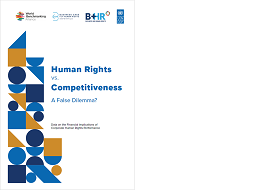
Human Rights vs Competitiveness, A False Dilemma?
|
| |
|
The paper conducted by the UNDP, Rule of Law and Peacebuilding Hub, and Sustainable Finance Hub found that human rights and business are not a trade off. According to their research that included the analysis of 235 corporates over 5 years, it is the opposite and a positive effect of investments in human rights on operational efficiency and a neutral-to-positive effect on market reaction was found. More specifically, they found that improvements in a corporate’s human rights conduct have a positive effect on their return on assets and leads to a more resilient supply chain and a more productive work force. The paper refutes the narrative of cost efficiency regarding lacking human rights conduct in corporates.
|
|
More >
|
| |
|
| |
|
The Shifting Investment Landscape
|
| |
|
BNP Paribas’ Investment Outlook 2026 highlights the resilience of the global economy with growth forecasts being revised upward. The IMF is expecting 3.2% global growth despite political tensions. Europe is on the forefoot thanks to more clarity regarding policies and fiscal spending on infrastructure and defence. The US is the most unpredictable region due to the shifts in tariffs and looser fiscal stance. Furthermore, the role of the federal reserve remains unclear as it is focusing on labour market risks. Asias main economic driver, China, is not expected to alter its proven strategy and further supports the local industry. National banks are expected to further lower interest rates and sovereign debt yields are facing upward pressure creating an investor friendly environment. Finally, artificial intelligence acts as catalyst in equity markets resulting in increasing capital expenditure and productivity.
|
|
More >
|
| |
|
|
|
| |
|
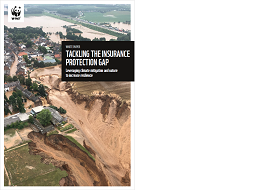
Tackling the Insurance Protection Gap
|
| |
|
WWF is addressing the issue of the increasing insurance protection gap. It points out that risks caused by degrading nature caused by GHG emissions are becoming less predictable and more destructive. The unpredictability of the likelihood and the financial damage make risks unattractive for insurers and unaffordable for the insured. Including indirect and ecosystem costs, the UN Office for Disaster Risk Reduction estimates the costs of natural disasters at USD 2.3 trillion averaging 2% of the global GDP. For developing countries, the situation is even more severe as their exposure to nature risks is typically higher. Governments are commencing to implement solutions such as publicly supported insurances. However, they only fight the symptoms instead of the root of the problem. The WWF suggests a strategy that advocates for a holistic approach that is built around nature based solutions.
|
|
More >
|
| |
|
| |
|
A Review of the Link Between Sustainability Performance and Company Valuation
|
| |
|
The paper, published by the World Business Council for Sustainable Development (WBCSD), finds that financial markets are increasingly recognizing sustainability as a driver of value and risk mitigation, though pricing remains uneven. Evidence is strongest in debt markets, where credible sustainability performance can lower borrowing costs, with green bonds showing an average 2–4 basis point premium. At the company level, integrated sustainability strategies can improve performance, with studies indicating EBITDA uplifts of 5–20% and typical returns on sustainability investments of 2–14x. Crucially, markets reward credibility and alignment between sustainability, strategy, and capital allocation, while inaction is increasingly viewed as a high-risk choice for long-term resilience and valuation.
|
|
More >
|
| |
|
|
| |
|
Would you like to find out more about recent developments in sustainable finance and members-only SSF activities? SSF members receive access to additional resources. Join our growing community to profit from it.
|
|
| |
|
| |
|
Kind regards
The SSF Team
|
| |
|
|
|
| |
|
|
| |
|
SWISS SUSTAINABLE FINANCE
|
|
|
| |
|
|
| |
|
|
| |
|
|
| |
|
|
| |
|
|
| |