| |
|
|
| |
|
|
| |
|
SSF Newsletter April 2026
|
| |
|
Tectonic Shifts
|
| |
|
Dear Reader
|
| |
|
Recent headlines have reminded us how exposed the economy remains when energy supply depends on fragile geopolitical balances. As tensions around the Strait of Hormuz disrupted international transport, oil prices surged and oil majors’ stocks rallied, but we were also reminded of how quickly geopolitical risk can translate into inflation, industrial costs and downside risks to global economic growth.
For European countries, the energy transition is not only an instrument of decarbonisation. It also feeds a broader resilience strategy: reducing exposure to imported volatility, strengthening domestic capacity and building stronger foundations for competitiveness.
Yet, the transition should not replace one dependency with another. A system excessively exposed to imported rare minerals or foreign technology (chips, cloud capacity, AI models), which mostly come from other world regions, would be equally fragile and unsustainable.
In these evolving geopolitical dynamics, sustainability is increasingly inseparable from matters of innovation, resilience and sovereignty. One strategy is to manage short term benefits. Another one is to build for structural leadership over the next generation.
Finance can play a central role in directing capital toward the systems, infrastructure and technologies that will define tomorrow’s durable competitiveness.
At SSF, this perspective informs several activities of our 2026 agenda, which you can browse here.
|
|
| |
|
|
Kind regards,
Romain Leroy-Castillo
Director AI & Education
|
| |
|
|
|
| |
|
|
|
|
| |
| |
|
SSF activities at a glance
|
| |
|
| |
|
SSF Annual Conference 2026: Innovating for a Sustainable Future
|
| |
|
On 18 June 2026, we will host the SSF Annual Conference 2026 at Kursaal in Bern. Join us to explore how innovative technologies help us to shape a more sustainable future. Register here
|
| |
|
|
|
| |
| |
|
Climate Week Zurich: SSF Member & Partner Events
|
| |
|
|
|
|
| |
| |
|
SSF as strategic partner of the 9th Sustainable Investor Summit
|
| |
|
On 22 April, the 9th Sustainable Investor Summit took place in Zurich with SSF as strategic partner. Katja Brunner (Director Legal & Regulatory) moderated a panel on the Swiss regulatory landscape with an exclusive lineup while Romain Leroy-Castillo (Director Education & AI) held a keynote on AI applications in sustainable finance. Read more
|
| |
|
|
|
| |
| |
|
SSF and GFN Event “Scaling Carbon Markets through New Technologies”
|
| |
|
On 16 April, Swiss Sustainable Finance and the Green Fintech Network co-hosted members-only event focusing on the potential contribution of new technologies in scaling voluntary carbon markets. One panel was moderated by Romain Leroy-Castillo (Director Education & AI). Read more
|
| |
|
|
|
| |
| |
|
Nature Exchange Group 2026 Opening Webinar
|
| |
|
Under the title "Considering Nature in Finance & Real Economy: Status Quo and Outlook" SSF and GCNSL kicked off the Nature Exchange Group 2026, co-moderated by Veronica Baker (Senior Project Manager and Lead Impact Investing & Nature). Around 120 people were interested in what the high-level speakers had to say. Read more
|
| |
|
|
|
| |
| |
|
SSF Position on “Finanzplatzinitiative” (FPI)
|
| |
|
The committee of the FPI submitted the signature list to the Federal Chancellery on 16 April 2026. Currently, the Federal Chancellery checks the number and validity of the signatures before the initiative is passed to the Federal Council. SSF formulated its position on the FPI. Read more
|
| |
|
|
|
| |
| |
|
Second UZH Biodiversity Roundtable
|
| |
|
Veronica Baker (Senior Project Manager and Lead Impact Investing & Nature, SSF) gave a keynote alongside Prof. Zacharias Sautner (UZH) and Prof. Alexander Wagner (UZH). The format aims to build and convene an ecosystem of biodiversity supporters rooted in Zurich and Switzerland. Read more
|
| |
|
|
|
| |
| |
|
SPII Community Webinar
|
| |
|
The SPII held its second community webinar. On 31 March more than 50 people gathered and shared their latest and ongoing projects with the community. Veronica Baker (Senior Project Manager and Lead Impact Investing & Nature) and Nicola Waefler (Project Manager) moderated the event. Read more
|
| |
|
|
|
| |
|
|
| |
| |
| |
|
Regulatory and market news
|
| |
|
| |
|
Swiss News
European News
International News
Market News
- The Ethos Foundation’s annual reports on the Swiss and International Ethos Engagement Pools summarize the 700+ engagement activities of their members. Among other results, an increase in the number of companies setting science-based targets (SBTi) for GHG emission reduction was noted.
- In a new article Wuest Partner emphasizes the transitory climate risks and its implications for the real estate sector and draws three regulatory scenarios. Although the real estate sector emits a notable share of the GHG into the atmosphere, effective regulations, engaged investors, and technological progress push the transition towards net-zero. Such a transition gains importance as physical climate risks become more material and affect investments, costs, revenues, and valuations.
- SBA and HSLU published a market study on the adoption of the new self-regulation on ESG integration. They found that 85% of the banks participating in the study follow the extended standards from 1 January 2026. Additionally, by complying with the existing MiFID-I regulation the remaining 15% are indirectly following the self-regulation as well.
- The Taskforce on Nature-related Financial Disclosures (TNFD) prepared an open consultation on state of nature measurement until 4 June 2026. The project is in collaboration with the Global Reporting Initiative (GRI) and Science Based Targets Network (SBTN) and is summarized in a discussion paper presenting their proposal.
- UNEP FI designed a new tool, the Climate Pathways Navigator, enabling users to gain sectoral and regional insights based on targeted climate scenario data. It supports financial institutions in understanding specific emissions, leading to better informed decisions regarding decarbonisation targets.
- Experts from the IPCC are working on a Methodology Report for Carbon Dioxide Removal Technologies, Carbon Capture, Utilization, and Storage (CDRT-CCUS) that should be available to governments by 2027. It will provide a detailed understanding of the state of the art of the technologies and a scientific foundation for estimations.
- UBS Asset Management has launched a tool to restore voting rights to their institutional clients. The new proxy-voting offer enables institutional clients to vote on specific agenda items if wished so by the clients and thus makes it possible to them to follow their stewardship activities.
|
|
| |
|
| |
| |
|
New SSF members and network partners
|
| |
|
| |
|
We are happy to welcome the following organisation as new SSF member:
The full list of our members and network partners, now standing at 251 can be found here.
|
|
| |
|
| |
| |
|
Artificial Intelligence (AI) in Sustainable Finance
|
| |
|
| |
- Survey by UZH and ZHAW on Artificial Intelligence in Sustainable Finance: The two universities are currently conducting an industry survey on the potential of “AI and Digital Assets for Sustainable Finance”. Contributing to the survey it is a unique opportunity to contribute to shaping future academic research agenda on these topics. Answer here.
- Sentiment analysis of corporate disclosures is among the most promising AI applications for sustainable finance. A recent paper by Prof. Markus Leippold (UZH) however demonstrated how these systems may fail, because the chosen disclosure language may materially skew results. As quickly as the technology evolves, so must the guardrails to keep it reliable.
|
|
| |
|
| |
| |
|
Upcoming sustainable finance events
|
| |
|
|
|
| |
|
Events at Climate Week Zurich co-organized by SSF or with SSF participation:
- 4 May 2026, 14:00 - 18:00h: Enabling Resilience: The Role of Finance to Scale for Climate Adaptation (UBS)
- 4 May 2026, 16:00 - 18:00h: Making Climate Transition Work: What Companies Need to Know, Climate Week Zurich (Ecofact, UN GCNSL, SSF)
- 5 May 2026, 13:30 - 15:30h: Unlocking Sustainability with Data and AI (EY)
- 5 May 2026, 15:00 - 18:00h: Monetizing nature-related risks (sustainserv)
- 6 May 2026, 16:30 - 20:00h: The Data Is In: How Nature-Related Risks Are Reshaping Regulatory Reporting (MSCI, WWF)
- 7 May 2026, 16:00 - 19:00h: Sustainable and Climate Finance - From Roots to Innovation (SSF, AMAS, Building Bridges, SBA, UZH)
|
|
| |
|
|
|
|
|
|
| |
|
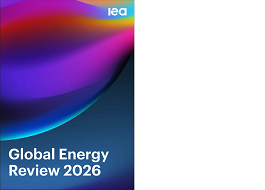
IEA Global Energy Review 2026
|
| |
|
The new IEA Global Energy Review 2026 provides a detailed overview of the energy market’s development and highlights some positive insights. The demand in solar PV has increased by 25% and marks the largest single source of growth. In total, demand for electricity grew at a rate which is more than double the rate of energy demand, while oil demand slowed down. In addition, IEA measured the highest capacity of renewable energy ever. Taken together, these are indicators of a progressing energy transition.
|
|
More >
|
| |

|
| |
|
OECD Economic Outlook, Interim Report March 2026
|
| |
|
The OECD Economic Outlook, Interim Report March 2026 highlights how the conflict in the Middle East is increasing tension on the resilience of the global economy. The closure of the Strait of Homouz caused a congestion in shipments of goods and the damage of energy infrastructure has led to a shortage of energy supply leading to a surge of energy prices resulting catalysing inflationary market forces. In the face of these challenges, the market has produced strong momentum in technology related investment and production and below-expectation tariffs.
|
|
More >
|
| |
|
|
|
| |
|
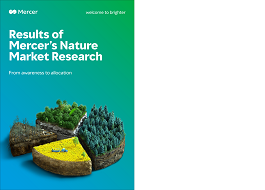
Results of Mercer’s Nature Market Research
|
| |
|
A new report by Mercer highlights how private markets are gaining traction as a key channel for nature-based investments, offering opportunities to address biodiversity loss while generating returns. Based on a study of 89 strategies, the findings show strong focus on land (71%), ecosystem regeneration (57%), and revenue models linked to carbon and biodiversity credits (63%), indicating where market activity is currently concentrated.
|
|
More >
|
| |
|
| |
|
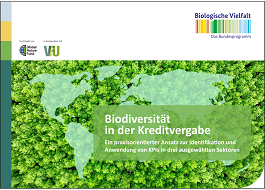
Biodiversität in der Kreditvergabe
|
| |
|
Global Nature Fund, in cooperation with VFU, published a practical approach to identify and use KPIs in three selected sectors. Biodiversity services affect an estimated 72% of Companies financed by banks in the EU area. On top of these dependencies, net-zero goals by 20250 further increase market demand and regulatory pressures. In order to formulate credible and measurable goals three key KPIs are suggested. First, “State of Nature”, second “Pressure”, and third, “Response”.
|
|
More >
|
| |
|
|
| |
|
Would you like to find out more about recent developments in sustainable finance and members-only SSF activities? SSF members receive access to additional resources. Join our large community to profit from it.
|
|
| |
|
| |
|
Kind regards
The SSF Team
|
| |
|
|
|
| |
|
|
| |
|
SWISS SUSTAINABLE FINANCE
|
|
|
| |
|
|
| |
|
|
| |
|
|
| |
|
|
| |
|
|
| |