
Literature and studies on AI and sustainable finance
Navigating the volume of AI-related publications, and selecting the ones with actual relevant insights on AI applications for sustainable finance, can quickly become overwhelming.
We are listing here our own curated selection of publications, with a brief summary of the key messages for each document. This does not pretend to be comprehensive, but it shall help you spare time in identifiying relevant literature and studies. (Last updated 28. August 2026)
Selected governance frameworks

OECD - Recommendation of the Council on Artificial Intelligence
The OECD Recommendation sets out internationally recognised principles for the responsible stewardship of trustworthy AI, covering human rights and democratic values, transparency, robustness, safety and accountability. First adopted in 2019 and revised in 2023 and 2024, it also provides recommendations to governments on creating an enabling and interoperable policy environment for AI.
more
NIST - AI Risk Management Framework
The NIST AI Risk Management Framework provides a voluntary, cross-technology and cross-sector framework for identifying and managing risks associated with AI systems. Its four core dimensions, Govern, Map, Measure and Manage, help organisations integrate considerations such as reliability, safety, transparency, fairness, privacy and accountability throughout the AI lifecycle. In 2026, the framework is currently under revision.
more
NIST - AI Risk Management Framework: GenAI Profile
This companion resource to the NIST AI Risk Management Framework focuses on risks specific to generative AI. It identifies risks ranging from data privacy to information integrity, cybersecurity and harmful content, and proposes actions that companies can take across the development and deployment lifecycle.
more
ISO/IEC 42001:2023 – Artificial Intelligence Management System
ISO/IEC 42001 is the international standard for an AI Management System (AIMS) for establishing, implementing, maintaining and continually improving governance of AI within organisations. It provides a structured approach to managing AI-related risks and opportunities, including policies, responsibilities, controls, monitoring and continual improvement.
more
EU - Assessment List for Trustworthy AI
ALTAI translates the European Commission’s principles for trustworthy AI into a self-assessment tool for organisations developing and deploying AI. Its questions cover seven areas: human oversight, technical robustness and safety, privacy and data governance, transparency, fairness, societal and environmental well-being, and accountability.
moreMarket Intelligence

The AI Index Report 2026
Issued by Stanford University, the "AI Index Report" is the most authoritative source globally to provide a state of the progress and adoption of AI across various domains of our societies. The 2026 edition tracks developments in AI capabilities, research, investment, adoption, responsible AI, regulation, labour markets and environmental impacts, providing a useful reference for understanding both the speed and broader implications of AI development.
more
Generative Artificial Intelligence in Finance
This OECD paper examines the emergence of generative AI in financial markets, where adoption remains more limited than the attention surrounding the technology might suggest. It considers potential applications alongside risks such as model errors, market manipulation, concentration and third-party dependencies, and discusses the implications of wider adoption for financial-market policy and supervision.

GenerativeAI in Banking - A Comprehensive Overview
The SBA report offers banks a practical overview of how generative AI can be introduced and scaled within financial institutions. It covers use-case identification, strategy and implementation, organisational readiness, governance, regulatory considerations and technology infrastructure.
more
Powering the Digital Economy: Opportunities and Risks of Artificial Intelligence in Finance (DP/2021/024)
This IMF paper examines the expanding use of AI and machine learning across financial services and the associated implications for financial stability and regulation. It balances potential gains in efficiency and financial inclusion against risks including embedded bias, data privacy, cybersecurity, market concentration and a widening digital divide.
more
The Societal Impact of Artificial Intelligence in Sustainable Investment Strategies
This paper explores how AI can influence sustainable investment decisions and, through capital allocation, broader societal outcomes. It discusses the use of data analytics, machine learning and predictive models to identify environmentally and socially aligned investments.
more
Environmental, social, and governance (ESG) and artificial intelligence in finance: State-of-the-art and research takeaways
This study does a systematic mapping of research papers at the intersection of sustainability, finance and artificial intelligence. It identifies eight major research domains, including investment, ESG disclosure, risk management, valuation, data and responsible AI.– and highlights how different AI techniques are being applied.
more
Artificial Intelligence for a Sustainable Finance: A Bibliometric Analysis
This study uses a “bibliometric method” to map the academic literature on artificial intelligence and sustainable finance: it examines the development of the research field itself, identifying publication trends, influential themes and the emerging structure of scholarship.
more
AI for Sustainable Finance: Governance Mechanisms for Institutional and Societal Approaches
This publication distinguishes between institutional uses of AI for sustainable finance, such as ESG investing, and societal applications aimed at goals such as financial inclusion. It examines the governance mechanisms needed to ensure these applications contribute to the Sustainable Development Goals, highlighting gaps and fragmentation in current regulatory and institutional approaches.
more
AI and the Next Wave of Transformation
BCG examines how AI may reshape the asset-management industry, drawing on a survey of managers representing more than USD 15 trillion in assets. The report focuses on opportunities to improve productivity and decision-making, deliver personalised portfolios and improve client experiences, and enhance investment processes, particularly in private markets.
more
Network for Greening the Financial System, NGFS Scenarios Portal
The NGFS Scenarios Portal provides climate scenarios, underlying data and analytical tools designed for central banks, supervisors, financial institutions and researchers.
moreXu, J., AI in ESG for Financial Institutions: An Industrial Survey, 2024, https://arxiv.org/abs/2403.05541
Brière, M., Artificial Intelligence for Sustainable Finance: Why it May Help, 2022 updated 2024, https://ssrn.com/abstract=4252329
Al-Sartawi, A., et al., The role of artificial intelligence in sustainable finance, 2022, https://doi.org/10.1080/20430795.2022.2057405
Adeoye, O., et al., Artificial Intelligence in ESG investing: Enhancing portfolio management and performance, 2024, https://ijsra.net/sites/default/files/IJSRA-2024-0305.pdf
Network for Greening the Financial System, NGFS Scenarios Portal, 2024, https://www.ngfs.net/ngfs-scenarios-portal/
Our World in Data, Artificial Intelligence, https://ourworldindata.org/artificial-intelligence
Foundational Papers
Hinton G. et al., Learning representations by back-propagating errors, 1986, National Institute of Standards and Technology (NIST), https://doi.org/10.1038/323533a0
Vaswani, A., et al., Attention Is All You Need, 2017, https://arxiv.org/abs/1706.03762
Research Papers
Greenblatt, R., et al., Brief independent investigation of agents' behavior, reasoning and collaboration in the OpenAI/ Hugging Face hacking incident, 2026, https://metr.org/blog/2026-08-26-openai-hugging-face-incident-investigation/
Kutasov, J., et al., Teaching Claude Why, 2026, https://alignment.anthropic.com/2026/teaching-claude-why/
Turetken A., et al., Battle of Transformers: Adversarial Attacks on Financial Sentiment Models, 2026, https://papers.ssrn.com/sol3/papers.cfm?abstract_id=4977483
Betley, J., et al., Training large language models on narrow tasks can lead to broad misalignment, 2026, https://www.nature.com/articles/s41586-025-09937-5
Panfilov, A., et al., Stealing Reasoning Traces from Proprietary LLM APIs, 2026, https://arxiv.org/abs/2608.09867
Mousavian Anaraki, S., et al., Large language models for sustainability reporting: A systematic review and research agenda, 2025, https://doi.org/10.1016/j.sftr.2025.101494
Calamai, T., et al., Corporate Greenwashing Detection in Text - a Survey, 2025, https://arxiv.org/abs/2502.07541
Zeng, F., et al., An optimized machine learning framework for predicting and interpreting corporate ESG greenwashing behavior, 2025, https://doi.org/10.1371/journal.pone.0316287
Li, Y., et al., Machine learning detection of manipulative environmental disclosures, 2025, https://www.nature.com/articles/s41598-025-29621-y
Lynch et al., Agentic Misalignment: How LLMs could be insider threats, 2025, https://www.anthropic.com/research/agentic-misalignment
Hauser, L., et al., Corporate Biodiversity and Water Impact and Risk: Seven Key Principles for Leveraging Insights From Satellite Remote Sensing, 2025, https://doi.org/10.1029/2024EF005474
Bingler, H., et al., How cheap talk in climate disclosures relates to climate initiatives, corporate emissions, and reputation risk, 2024, https://papers.ssrn.com/sol3/papers.cfm?abstract_id=4000708
Leippold, M., et al., Automated Fact-Checking of Climate Change Claims with Large Language Models, 2024, https://arxiv.org/abs/2401.12566
Colesanti-Senni, C., et al., Using AI to Assess the Decision-Usefulness of Corporates’ Nature-related Disclosures, 2024, https://ssrn.com/abstract=4860331
Kotsch, R., Network Analysis of the Global Trade of "Hot Air": Key Lessons for the Paris Agreement, 2024, https://ssrn.com/abstract=5038486
Schwendner, P., et al., Bio-Value-at-Risk: A Concept to Assessing the Implications of Biodiversity Risks on Portfolio Management using Geospatial Analysis, 2024, https://ssrn.com/abstract=4784271
Ni, J., et al., CHATREPORT: Democratizing Sustainability Disclosure Analysis through LLM-based Tools, 2023, https://ssrn.com/abstract=4476733
Caldecott, B., et al., Spatial finance: practical and theoretical contributions to financial analysis, 2022, https://doi.org/10.1080/20430795.2022.2153007
Patterson, D., et al., The Biodiversity Data Puzzle, 2022, https://www.wwf.org.uk/sites/default/files/2022-12/The-Biodiversity-Data-Puzzle.pdf
Betz, R., et al., The Carbon Market Challenge: Preventing Abuse Through Effective Governance, 2022, https://www.cambridge.org/core/books/carbon-market-challenge/9261122253200C956EAF02B5C9AF53C8
Leippold, M., et al., ClimateBERT: A Pretrained Language Model for Climate-Related Text, 2021, https://arxiv.org/abs/2110.12010
Responsible AI Guidance

Responsible Use of Generative AI - Playbook for business leaders
the UC Berkely playbook translates responsible-AI principles into practical recommendations for organisations developing products with generative AI. It outlines key GenAI risks and proposes ten concrete “plays” that product managers and business leaders can use to strengthen governance, risk assessment, oversight and responsible deployment.
more
Responsible AI Playbook for Investors
Developed by the World Economic Forum and CPP Investments, this playbook examines the role investors can play in accelerating responsible AI practices across portfolio companies and the wider investment ecosystem. Based on research and stakeholder interviews, it provides guidance for engaging boards and management on AI governance, risk management and accountability.
more
Measuring what matters: How to assess AI’s environmental impact
This report reviews how the environmental footprint of AI is currently measured across model training, inference and the wider technology supply chain. It identifies major gaps – including reliance on estimates, limited lifecycle coverage and weak measurement of water use and Scope 3 impacts – and recommends improvements.
more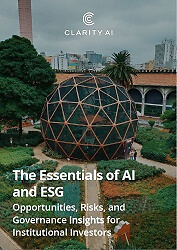
The essentials of AI and ESG
Written for institutional investors, this paper examines both sides of the relationship between AI and ESG: how AI can improve sustainability analysis and investment decisions, and the environmental and social risks created by AI itself. It highlights energy and water use, privacy and labour impacts, and argues for clear accountability and governance around AI strategy and deployment.
moreRegulatory-related materials
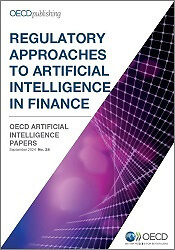
OECD - Regulatory approaches to Artificial Intelligence
Based on a survey of 49 OECD and non-OECD jurisdictions, this report compares how authorities are approaching the use of AI in financial markets. It maps current AI use cases and associated risks, reviews the different regulatory frameworks being applied, and provides a cross-jurisdictional picture of how financial regulation is adapting to AI.
more
Overview of AI regulation in Switzerland
Prepared for the Federal Council, this report assesses possible approaches to AI regulation in Switzerland against three objectives: maintaining Switzerland’s attractiveness as an innovation location, protecting fundamental rights and strengthening public trust. It compares sector-specific regulation, implementation of the Council of Europe AI Convention, and closer alignment with the EU AI Act.
more
FINMA Guidance 08/2024 - Governance and risk management when using AI
FINMA is drawing the supervised institutions’ attention to the need for appropriate identification, assessment, management and monitoring of the risks resulting from the adoption of AI. It also describes FINMA’s observations from its ongoing supervision.
more
Artificial Intelligence in Capital Markets: Use Cases, Risks, and Challenges
This IOSCO consultation report examines how AI, including generative AI and large language models, is being used across capital markets and how adoption has evolved since IOSCO’s earlier work. It analyses potential implications for investor protection, market integrity and financial stability.
more
The use of artificial intelligence for policy purposes
Prepared for the G20, this BIS report examines how central banks, regulators and supervisors are using AI to support public-policy functions. It provides examples across statistics, macroeconomic analysis, payment-system oversight and financial supervision.
more
FINMA Guidance 05/2026 - Quantum Computing
Based on a survey of 60 Swiss financial institutions, this guidance examines the emerging operational and cybersecurity risks that quantum computing may pose to Swiss financial institutions, particularly through its potential to undermine existing cryptography. The discusses possible measures to mitigate the cyber risk posed by powerful quantum computers..
more
Artificial intelligence: FINMA sets out its supervisory expectations
FINMA outlines its supervisory expectations for financial institutions using AI in areas such as internal processes, risk management, pricing and customer interactions. It focuses on four broad principles: clear governance and responsibilities, robustness and reliability, transparency and explainability, and non-discrimination.
more
Accelerated Data Science, AI and GeoAI for Sustainable Finance in Central Banking and Supervision
This paper examines the computing and data infrastructure needed to apply AI and geospatial analytics to sustainable-finance questions faced by central banks and supervisors. It discusses the integration of complex structured and unstructured sustainability data, high-performance computing, explainable AI and supervisory controls
more
Project Gaia: enabling climate risk analysis
The Project Gaia report demonstrates how large language models can extract and harmonise climate-related indicators from heterogeneous corporate disclosures. Its proof of concept combines semantic search and structured prompting to analyse climate information at scale while addressing practical LLM challenges such as hallucinations.
moreEuropean Union, Regulation (EU) 2024/1689 (Artificial Intelligence Act), 2024, https://eur-lex.europa.eu/eli/reg/2024/1689/oj/eng
European Banking Authority (EBA), Special topic – Artificial intelligence, 2024, https://www.eba.europa.eu/publications-and-media/publications/special-topic-artificial-intelligence
United Nations, Artificial intelligence (AI), 2024, https://www.un.org/en/global-issues/artificial-intelligence
 Any suggestion, comment or question? Reach out to Romain Leroy-Castillo, Director & Artificial Intelligence lead at SSF

